


Calorie counting works, but if you’re like most busy moms, you don’t have the bandwidth for it anymore. You want to be able to lose weight in a more sustainable way that doesn’t involve so much math.
Here’s the good news: you don’t have to count calories to lose weight. But you still have to be in a calorie deficit. In this post and podcast episode, I share simple, sustainable ways to create a calorie deficit without tracking apps, point systems, or obsessing over the menu at date night. Here’s exactly what to do.
First, Understand What a Calorie Deficit Actually Means
A calorie deficit just means your body is burning more calories than you’re taking in. And in order to lose weight, you have to be in a calorie deficit. But there are different ways to achieve a calorie deficit. You can do intermittent fasting, pay attention to portions, exercise more, do a restrictive diet, or go on a GLP-1 medication. There are many options for creating a calorie deficit but the question is – can you keep up with it? Is it sustainable long-term? Because whatever you do to lose weight, you have to keep doing to keep the weight off.
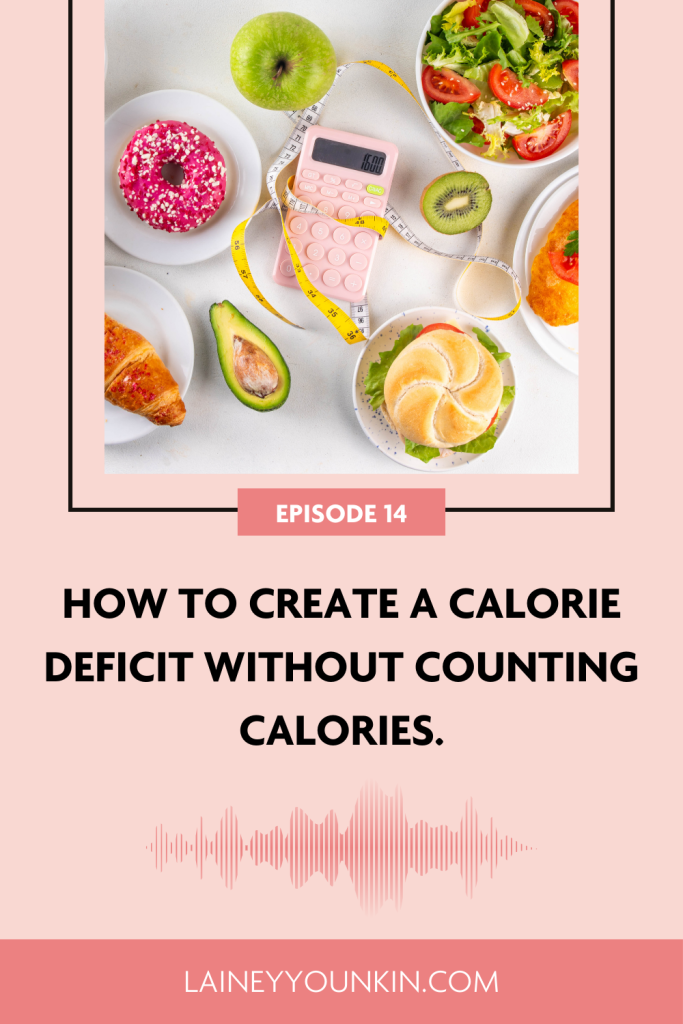
Here’s how to achieve a calorie deficit without counting calories or following a restrictive diet:
1. Get Your Portions Right
This is the foundation. When you understand roughly what a serving of protein, carbs, and fat should look like on your plate, you can create a calorie deficit automatically — no math required.
Here’s a simple example: one cup of cooked pasta has around 200 calories. Fill half your plate with pasta and you’re looking at close to 400 calories before anything else. Swap that half-plate of pasta for vegetables, and you’re at closer to 60-90 calories for that portion. Same plate, same meal — just a different ratio. That one shift alone creates a meaningful calorie deficit without counting a thing.
Learning the rough calorie amount of different food groups and what a balanced plate looks like takes a little upfront effort, but once you establish the habit of making balanced meals most of the time, it becomes second nature.
2. Front-Load Your Day
If you’re trying to eat as little as possible in the morning to “save calories,” this is going to backfire. Skimping on breakfast leaves your body under-fueled, and those missing calories tend to show up as intense carb and sugar cravings by 3 or 4 p.m. — when willpower is low and the pantry is close by.
Start your day with more food, not less. More protein, more fiber, more of the nutrients that keep you full without a lot of calories. Think Greek yogurt, eggs, fruit, or a protein smoothie. When you fuel up in the morning, you naturally eat less later in the day and end up in a calorie deficit without trying.

3. Fill Up on High-Volume, High-Nutrient Foods
The goal is to feel full and satisfied on fewer calories. The foods that do this best are ones high in fiber, protein, and water content — fruits, vegetables, lean proteins, legumes. These foods take up more space in your stomach, digest slowly, and keep hunger hormones in check.
Processed foods do the opposite. They’re calorie-dense, digest quickly, and leave you hungry again fast. You don’t have to eliminate them — just make the high-volume, high-nutrient foods the foundation of your meals. Here’s another trick: fill up on protein and vegetables first.
4. Prioritize Sleep
This one doesn’t get enough credit. When you’re sleep-deprived, your body produces more ghrelin — the hormone that tells your brain you’re hungry. If you’ve ever had a bad night’s sleep and spent the next day feeling snacky no matter what you ate, that’s why. Poor sleep makes it almost impossible to stay in a calorie deficit because your hunger signals are working against you.
You can’t always control sleep quality, especially with young kids at home. But where you can control it — limiting late-night phone scrolling, creating a wind-down routine — it’s worth the effort. Better sleep means better appetite regulation, which means a calorie deficit becomes much easier to maintain.
5. Manage Your Stress
Chronic stress raises cortisol, your stress hormone, which drives belly fat storage and increases sugar cravings. Managing stress isn’t just good for your mental health — it directly affects your ability to create a calorie deficit by reducing the cravings and emotional eating that can derail progress.
This doesn’t have to mean meditation or a spa day, although those are great too. Even small shifts — a short walk, shutting down work email an hour earlier, asking for help — can lower cortisol levels and make it easier to eat in alignment with your goals.
6. Move More Throughout the Day
You burn a significant chunk of your daily calories through what’s called NEAT — non-exercise activity thermogenesis. This is all the movement that isn’t a formal workout: walking to the car, taking the stairs, fidgeting, doing chores. It adds up more than most people realize.
You don’t need an hour at the gym every day. Just look for small ways to move more: park farther away, take a short walk after lunch, stand while on calls. These little habits increase your calorie burn without requiring any extra time carved out of a busy schedule.
7. Lift Weights 3–4 Times a Week
Building muscle is one of the best long-term investments you can make for your metabolism. The more muscle you have, the more calories your body burns at rest — meaning you’re creating a calorie deficit even while sitting at your desk. If you’re not lifting at all, start with once a week and build from there. The women who get to three or four sessions per week tend to see results the fastest.
Putting It All Together
You don’t need to overhaul everything at once. Start with the two or three shifts that feel most doable and build from there. For most women, adding more protein at breakfast and getting portions right at meals moves the needle faster than anything else — and neither requires tracking a single calorie.
It doesn’t have to be complicated, but you do have to be consistent.
Ready to stop guessing and get a clear, simple plan? Download my free guide: 5 Habits for Sustainable Weight Loss for Busy Moms — the exact habits used with clients to create a calorie deficit naturally, without counting a thing.



0 Comments